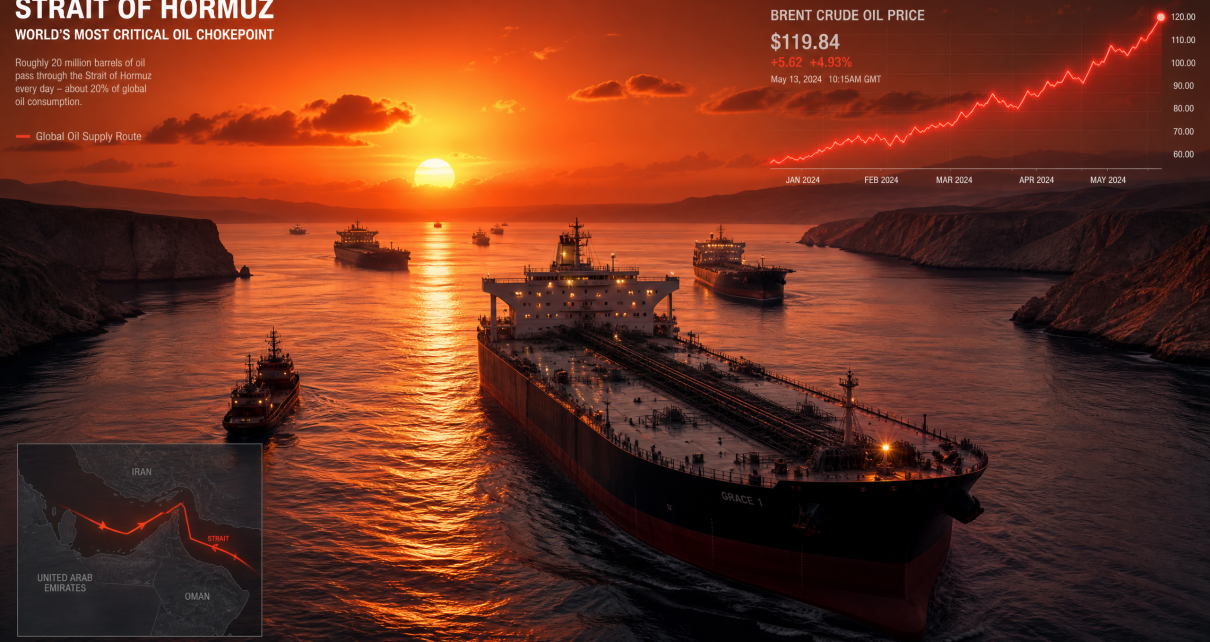
The global energy market is currently facing one of its most significant challenges in decades. As of May 11, 2026, international oil benchmarks have seen a sharp upward trajectory following the effective closure of the Strait of Hormuz, a critical maritime corridor that handles approximately 20% of the world’s total petroleum liquids consumption.
Market Reaction: Brent and WTI Hit New Milestones
The impact on trading floors was immediate and pronounced. Brent crude futures jumped by over 3%, settling at $104.47 per barrel. Similarly, West Texas Intermediate (WTI) advanced to $98.51, reflecting the growing anxiety among traders and analysts alike. This surge is not merely a temporary spike but a reflection of deep-seated structural supply concerns that have been building over the past ten weeks.
Why the Strait of Hormuz Matters to You
The Strait of Hormuz is often described as the world’s most important oil chokepoint. Located between Oman and Iran, it connects the Persian Gulf with the Gulf of Oman and the Arabian Sea. At its narrowest, it is only 21 miles wide, yet it is the primary artery for oil from major producers like Saudi Arabia, Iraq, Kuwait, and the UAE.
When this “pressure valve” of the global energy system is restricted, the consequences are felt globally. From rising fuel costs for commuters in the United States to increased manufacturing expenses in Asia and Europe, the ripple effects are unavoidable.
The Geopolitical Impasse and Future Outlook
The current crisis stems from a prolonged diplomatic breakdown between major global powers. Despite various peace proposals, tensions remain high, and the recent rejection of a key ceasefire framework has only added fuel to the fire.
Analysts warn that if the closure persists toward the 12-week mark, we could see Brent crude approaching $154 per barrel. Such a scenario would likely trigger widespread demand destruction and force significant policy interventions across major economies.
What to Watch Next
All eyes are now on the upcoming diplomatic meetings in Beijing. Market participants are hopeful that international mediation can provide a breakthrough. However, until a verified de-escalation occurs, the global economy remains on edge, navigating a period of unprecedented volatility in the energy sector.